Severe weather patterns are no longer isolated surprises; they are an annual reality that tests the limits of modern residential construction. From record-setting summer heatwaves that strain electrical grids to sudden deep freezes that rupture uninsulated pipes, the environment subjects our homes to relentless pressure. For many homeowners, the response to these environmental stressors remains reactive. They wait until a storm clears or the temperature drops below freezing before considering the state of their property, leading to emergency repair fees, inflated utility bills, and avoidable structural damage.
Taking a proactive approach to seasonal home preparation changes that dynamic completely. By systematically evaluating your building’s exterior envelope, indoor climate equipment, and core plumbing infrastructure, you create a resilient environment capable of withstanding severe weather shifts. This guide breaks down the essential steps to protect your property, optimize energy efficiency, and maintain year-round comfort regardless of what is happening outside.
Fortifying the Exterior Envelope Against Heavy Rain, Ice, and Runoff
Protecting a home from extreme weather begins at its highest point and works downward. Your roof and foundation form the primary defense against water intrusion, which remains the single most destructive force a house can encounter. During periods of rapid snowmelt or severe torrential downpours, even minor vulnerabilities in these protective barriers can lead to extensive structural deterioration.
Inspecting and Sealing Upper Entry Points to Prevent Roof Damage
Before the heavy storm season arrives, conduct a thorough visual audit of your roofline. You do not necessarily need to climb onto the roof to perform an initial assessment; a high-powered pair of binoculars from the ground allows you to safely check for loose, curling, or missing shingles. Pay close attention to the valleys where different roof planes meet, as well as the flashing around chimneys, skylights, and vent pipes. These transition zones represent the most common points of origin for subtle leaks.
Ground-Level Audit:
- Inspect shingles for curling or missing sections.
- Examine flashing around chimneys, skylights, and vents.
- Clear debris from gutters and downspouts.
Professional Intervention:
- Address damaged underlayment or structural decking.
- Perform targeted roofing repair before seasonal storms arrive.
When debris like leaves and twigs accumulate in gutters, water backs up under the lower edge of the roofing material. When temperatures drop, this standing water freezes into thick ice dams that force moisture upward into your home’s framing. Clearing gutters regularly and replacing worn fascia boards ensures that water flows freely off the roof and into downspouts. If your visual inspection reveals widespread granule loss, sagging rooflines, or degraded flashing, it is critical to hire a professional specializing in roofing repair. Resolving these minor structural defects before winter sets in stops moisture from migrating into your attic, preserving your insulation and preventing costly ceiling collapses inside the living quarters.
Securing Ground-Level Surfaces and Foundations to Direct Stormwater Away
Once water safely leaves the roof, the next challenge is managing where it lands. Ground-level soil should always slope downward and away from your home’s foundation walls at a pitch of at least six inches over the first ten feet. When the ground settles over time, it often forms negative grading that channels rainwater directly against basement walls and concrete footings.
Hydraulic pressure builds as water saturates the soil surrounding your foundation. Over time, this pressure forces moisture through microscopic pores, hairline fractures, and expansion joints in the concrete. To mitigate this risk:
- Clean and extend all downspout outlets so they discharge water at least five to six feet away from the foundation perimeter.
- Fill low spots in the soil around the house with dense clay-based soil rather than porous mulch to encourage outward runoff.
- Inspect basement walls from the inside for efflorescence, a white powdery mineral deposit that indicates water is actively evaporating through the concrete.
If you notice persistent dampness, water stains, or visible wall bowing, scheduling professional foundation waterproofing services becomes an urgent priority. Installing subterranean drainage membranes, interior sump pump channels, or exterior elastomeric coatings prevents hydro-static pressure from compromising your home’s core foundation during heavy spring rains.
Protecting Outdoor Structures and Hardscapes from Seasonal Wear
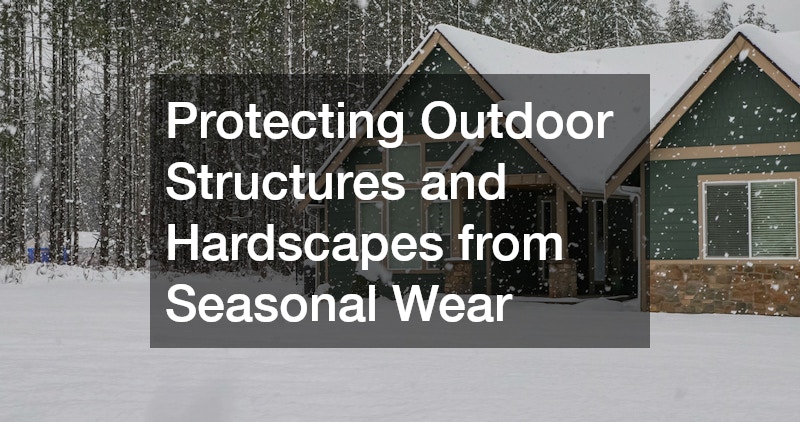
Outdoor living spaces and paved surfaces are continuously exposed to thermal expansion and contraction. As ambient temperatures shift from extreme summer heat to sub-zero winter cold, materials like asphalt, concrete, and exterior piping expand and shrink. Without proper maintenance, this physical movement creates structural failures that shorten the lifespan of high-value exterior assets.
Maintaining Hardscape Drainage and Surface Sealing Before Freezing Cycles
Driveways and walkways represent a significant financial investment, yet they are often overlooked during seasonal winterization routine. Asphalt, in particular, is a flexible material susceptible to oxidation from solar ultraviolet radiation and degradation from standing water.
Imagine a small hairline crack developing on your asphalt driveway during a rainy autumn week. As temperature drops below thirty-two degrees Fahrenheit, that trapped water expands by approximately nine percent as it turns to ice. This expansion exerts immense force on the aggregate surrounding the crack, prying the pavement apart. When heavy vehicles drive over these weakened sections during the thaw, the broken surface collapses into a pothole.
Applying a high-quality fuel-resistant seal coat every two to three years fills minor surface pores and protects the bituminous binder from moisture penetration. Before applying any sealant, thoroughly clean all cracks using a wire brush, remove lingering vegetation, and inject a hot-pour crack filler to block moisture entry. For driveways with extensive web-like cracking or structural settling, arranging for professional asphalt paving maintenance before the cold season sets in restores structural integrity and protects against winter salt damage.
Winterizing and Protecting Recreational Water Systems Before Low Temperatures Hit
Outdoor water installations require precise end-of-season management to prevent structural and mechanical damage caused by frozen lines. Unlike indoor plumbing, which benefits from conditioned ambient air, pool circulation lines and exterior water amenities are fully exposed to ambient soil and air temperatures.
Proper winterization involves more than simply throwing a heavy cover over the water. You must thoroughly balance the water chemistry to prevent staining and algae growth, backwash the filtration system, and blow out all supply and return lines with low-pressure air to ensure no water remains in low-lying pipe elbows.
Step 1: Balance water chemistry and backwash the filter system. Step 2: Lower the water level below the skimmer line and blow out plumbing pipes. Step 3: Drain power equipment, including pumps and heating units. Step 4: Secure a heavy-duty safety cover over the pool area.
High-value mechanical components demand extra attention during this process. Water left sitting inside heat exchangers, pump housings, or filter canisters will expand when frozen, cracking internal headers and ruining internal electrical circuits. If you plan to extend your swimming season into early autumn or want to ensure your heating equipment survives severe cold spells, scheduling a professional pool heater installation or seasonal maintenance check guarantees that internal heating elements are fully drained, bypassed, and protected from frost damage.
Optimizing Indoor Climate Control Systems for Extreme Heat and Cold
Your home’s heating and cooling hardware functions as its mechanical heart. During extreme summer heatwaves or prolonged winter cold snaps, these systems run almost continuously to maintain safe indoor temperatures. Without proper maintenance, this continuous operation increases mechanical wear, causes operational failures, and drives monthly energy expenses up significantly.
Auditing and Servicing Central Heating and Cooling Infrastructure
A well-maintained central climate control system delivers consistent air distribution while consuming minimal electricity or natural gas. However, over months of operation, dust, pet dander, and environmental debris accumulate on critical internal components, restricting airflow and forcing motors to work much harder than necessary.
Consider the air filter situated in your main return duct. When this filter fills with dust, air intake drops dramatically. This restricted airflow causes cooling coils to freeze into solid blocks of ice during summer, while in winter, it can cause furnace heat exchangers to overheat and trip safety limit switches. Replacing filters every thirty to ninety days is the simplest and most effective step a homeowner can take to protect system longevity.
Beyond basic filter swaps, complex mechanical systems demand expert oversight. An experienced HVAC contractor possesses the specialized tools required to test electrical draw, calibrate electronic thermostats, measure refrigerant charge levels, and clean burner assemblies safely. Annual service agreements catch small component issues—like bulging capacitors or loose fan belts—before they turn into complete system shutdowns during peak weather events when service technicians are fully booked.
Upgrading Inefficient Primary Cooling Systems to Handle Summer Heatwaves
Even well-maintained central air conditioners eventually reach the end of their operational lifespan, which typically ranges from twelve to fifteen years. Older air units often rely on obsolete refrigerants and utilize single-stage compressors that operate strictly at maximum power, driving up utility bills during warm periods.
If your current system struggles to maintain your target thermostat setting during extreme heat, or if repair quotes start approaching half the cost of a new system, replacement becomes the most practical financial path. Modern cooling units feature multi-stage or variable-speed compressors that automatically adjust output based on real-time cooling demand.
Legacy Cooling Systems:
- Single-stage operation operating strictly at 100% power.
- High energy consumption during warm spikes.
- Frequent cycling, leading to uneven indoor temperatures.
Modern Cooling Systems:
- Variable-speed compressor technology.
- Precise humidity and indoor temperature control.
- Lower monthly operating costs during peak heat waves.
Investing in a modern AC installation before the summer season kicks into high gear ensures your household remains safe and comfortable through prolonged heatwaves. New high-efficiency cooling units remove indoor humidity far more effectively than aging equipment, allowing you to feel cool at higher thermostat settings and lowering your overall summer energy consumption.
Adding Supplemental Climate Solutions for Hard-to-Condition Zones
Many home floor plans contain specific rooms that prove difficult to keep comfortable regardless of how well the central system operates. Upper-floor bedrooms, sunrooms with expansive glass walls, converted attic spaces, and home additions often suffer from uneven airflow or high heat gain. Trying to force central heating or cooling units to regulate these localized spaces usually results in over-conditioning the rest of the house, wasting significant energy in the process.
Supplemental zone control provides an efficient way to resolve these comfort discrepancies without replacing existing ductwork. By isolating problem areas and addressing their specific thermal demands independently, homeowners can maintain consistent indoor temperatures while minimizing total energy usage.
Scenario: A homeowner converts a drafty space over an unheated garage into a home office. Problem: The central heating and cooling unit fails to maintain steady temperatures in the room, making it uncomfortably cold in January and excessively hot in July. Solution: The homeowner installs a ductless climate control system directly on an exterior wall. Result: The space maintains precise temperature control year-round without overloading the main HVAC system or altering central home ductwork.
Installing a ductless mini split offers a flexible, highly efficient fix for localized thermal problems. These compact units require only a small hole through an exterior wall to connect the indoor air-handling head with the outdoor compressor. Because they deliver conditioned air directly into the space without traveling through long, uninsulated duct runs, they eliminate duct losses, which can account for more than thirty percent of energy consumption in typical homes.
Safeguarding Household Plumbing and Water Quality
A home’s plumbing network is especially vulnerable during winter freezes and heavy spring rains. Sub-zero temperatures transform static water inside exposed pipes into solid ice, generating intense internal pressure that ruptures copper, PEX, and PVC lines alike. Concurrently, heavy rainfall and seasonal runoff alter the quality and chemistry of municipal and private water supplies, introducing new filtration challenges.
Insulating Internal Lines and Maintaining Hot Water Equipment
Preventing frozen pipes requires keeping water moving or insulating supply lines from ambient cold air. Focus on unconditioned areas like basements, crawl spaces, attics, and exterior-facing garage walls.
- Slip pre-slit foam insulation sleeves over all exposed hot and cold water pipes in unheated spaces, securing joints with utility tape.
- Install insulated protective covers over exterior hose bibbs after disconnecting and draining garden hoses.
- Leave cabinet doors open beneath kitchen and bathroom sinks during severe winter cold snaps to allow warm indoor air to circulate around plumbing fixtures.
- Allow faucets on vulnerable exterior walls to drip at a slow, steady rate during sub-zero nights to relieve pressure buildup within the lines.
If a pipe freezes despite these precautions, shut off the main water valve immediately before attempting to thaw the line with a gentle heat source like a hairdryer. For complex plumbing layouts or severe frozen sections, calling a licensed plumber prevents accidental pipe bursts and ensures your system is properly protected against future freezes.
Addressing Hot Water Reliability and Municipal Water Changes
Your water heater operates under heavy demand during winter months, as cold incoming groundwater forces the tank to work longer to reach desired household temperatures. Over time, naturally occurring minerals—primarily calcium and magnesium—settle to the bottom of the heater tank, creating a dense sediment layer that insulates water from the heating element.
This mineral layer forces the unit to run longer, causing thermal stress that weakens the tank wall and creates popping noises during heating cycles.
Mineral Accumulation:
- Cold incoming groundwater forces longer heating cycles.
- Calcium and magnesium build up on the tank bottom.
- Sediment layer insulates water from the heating element.
System Consequences:
- Thermal stress causes structural tank fatigue.
- Noisy operation occurs during heating cycles.
- System efficiency drops while energy costs rise.
Arranging for water heater repair at the first sign of popping sounds, rusty water, or fluctuating water temperatures restores heating efficiency and prevents unexpected tank failures in the dead of winter.
In addition to thermal challenges, seasonal weather shifts directly impact water quality. Heavy spring rains and rapid snowmelt wash agricultural runoff, sediment, and organic matter into reservoirs and shallow wells. Municipal utilities often increase chlorine treatment levels during these transition periods to clear high bacterial loads. Utilizing local water treatment services helps identify shifting mineral levels, neutralizing harsh chemicals and filtering out seasonal sediment before municipal water reaches your household appliances, protecting both your health and internal plumbing fixtures.
Protecting Your Property Year-Round
Preparing your living space for extreme seasonal weather changes requires ongoing care and maintenance rather than a single afternoon of quick repairs. By taking time to evaluate your roof, secure your foundation, service mechanical climate equipment, and protect plumbing lines before severe weather hits, you safeguard your home against unexpected structural damage and emergency repair costs.
A resilient home operates efficiently, costs less to heat and cool, and offers a comfortable indoor sanctuary through summer heatwaves and severe winter storms alike. Develop a personalized seasonal preparation checklist, tackle high-priority projects early each season, and partner with qualified local specialists whenever complex structural or mechanical needs arise. Investing in proactive maintenance today guarantees that your property remains safe, durable, and comfortable for years to come.